

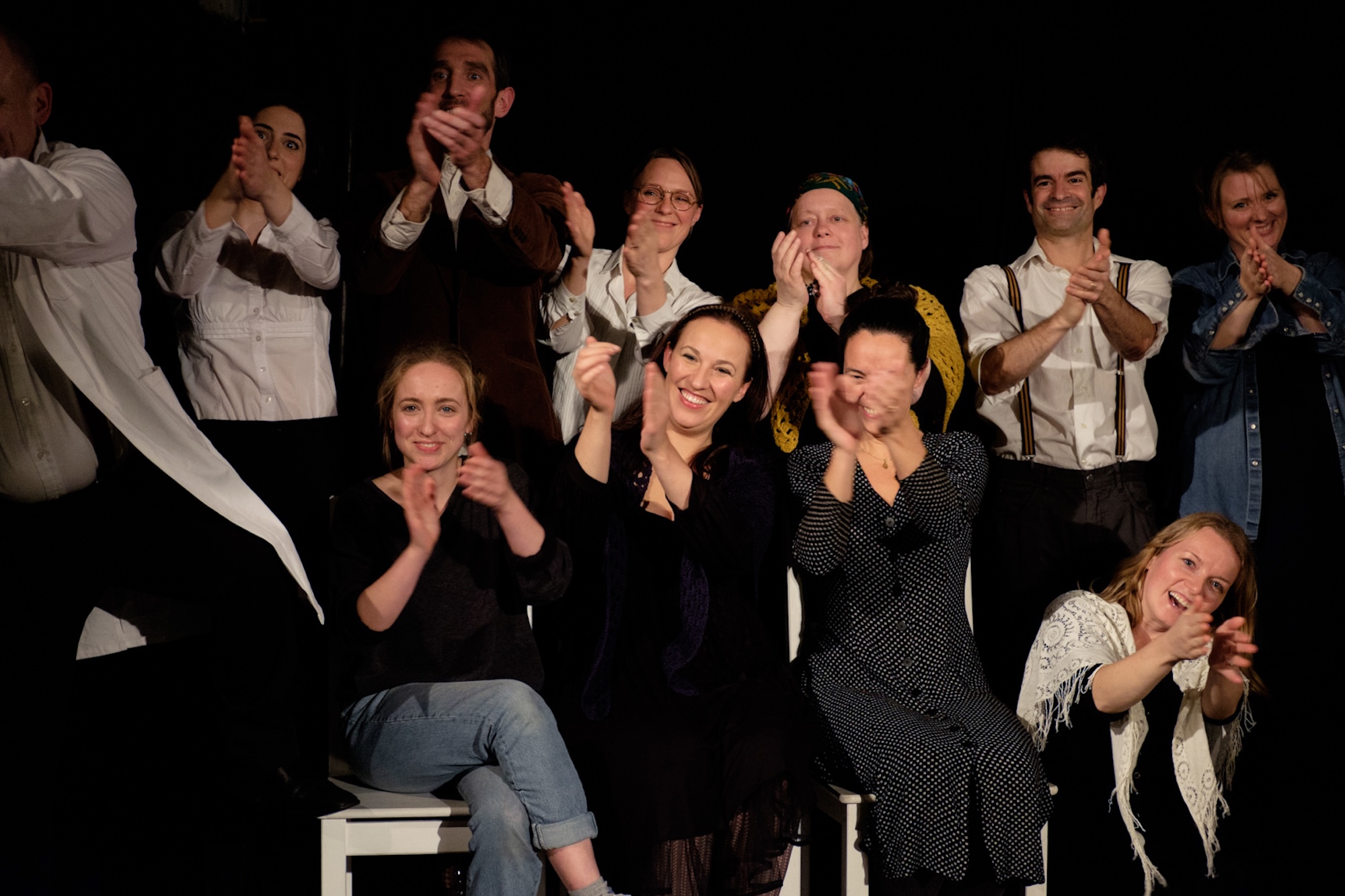

Today is our birthday – well, not us (Camila and Trine), but Foreign Affairs. It’s the exact date of our first show, 16 years ago, in Hackney Wick. To mark the day – and because we’re also celebrating 10 years of our mentorship – we thought we’d share 10 insights from a decade of the Foreign Affairs Theatre Translator Mentorship.
Here goes …
1. Translation is a human, creative act
Not that we ever thought otherwise, but a decade of running the mentorship has underlined just how human and creative the process of translating for the stage really is – and how there’s no single approach that fits all, especially when working with plays from across the globe.
2. Cross-cultural work expands your artistic horizon
In so many ways, we’ve “travelled” the world through the plays and the people we’ve connected with – without ever leaving the ground. Working across cultures and languages has consistently widened our perspectives and deepened our practice; each play and its translator has taught us something new about the act of making theatre.
3. Translators carry strange, specific expertise
Every translation comes with its own set of demands, requiring research that reaches far beyond language and geography. Translators spend ages investigating these hyper-specific details, and it’s quite wonderful watching that knowledge land in the rehearsal room.
4. Staging a play in translation is never a straight line
It never really is, but when a company run by two people from different parts of the world (neither with English as a first language) leads the process, alongside a team that’s just as culturally complex, the process gets wonderfully complicated – like a bridge that is constantly changing shape to match the crossing and the travellers.
5. Navigating international work comes with real responsibility
Working on plays from around the globe is a lot of fun – but it carries real responsibility too. Staging plays in English translation comes with the weight of colonisation, and the wider power dynamics of who gets to be translated, staged, and heard. We are continuously learning how to navigate this space, and how to actively contribute to decolonising it.
6. Small experiments can become core methodologies
Truthfully, the mentorship started as a simple idea, but over time it has evolved into the cornerstone of our practice. It’s shaped our productions, informed our creative learning programmes for translators, theatre-makers, and young people – and grown into a clear methodology.
7. Collaboration creates its own momentum
What began as partnerships and collaborations here in London has snowballed into a growing network across Europe and beyond. That momentum has turned into exciting projects – like our reading and showcase events in partnership with Flanders Literature and the Estonian Theatre Agency, alongside our work nurturing new writing with PAV.
8. The work can find a home in unexpected places
Early in our mentorship journey, we were invited to share our methodology at translation conferences and events, as well as at universities – something we continue to do today. As two people without academic backgrounds, stepping into those spaces felt a little daunting at first, but we found we genuinely loved it and have collaborated with academia ever since. For example, we now partner with the brilliant Dr Margherita Laera on her project, Performing International Plays, designing and delivering workshops in secondary schools – work directly linked to our mentorship practice.
9. Programmes end, but community lasts
Each edition brought people together – actors, translators, and makers – and with every year our creative community expanded. It’s grown into something that extends well beyond the mentorship itself, including online networks like our Theatre Translator Lab in 2020 and forming lasting connections we are forever grateful for.
10. Doing it your own way builds something undeniable
Over ten years, the mentorship has given us a clear practice and a defined place in the UK theatre landscape – even in an industry where translation and translators are still undervalued. Winning The Stage International Award this year was undeniably a wonderful moment of recognition, but the real win is the ground we’ve carved out and the craft we’ve built. We know our practice inside out, and we’re just getting started. Watch this space.
None of this happens without the translators, mentors, partners, and friends who’ve shaped it with us over the past 10 years – obrigada, tak, thank you!
Here’s to the next ten!
Camila & Trine